.png?width=1322&height=350&name=C3ITXperts-logo-R%20(1).png "C3ITXperts-logo-R (1)")


A few years ago, computers were introduced into classrooms. Teachers spent time teaching students how to use the systems and simultaneously learnt how to use the systems to teach better. Now, computers are a part of our life in every way and they have completely taken over the educational landscape as well. The Internet of Things (IOT) connects hardware and software with metric systems to measure and analyze results. We can see a rise in the use of these concepts in educational institutions over the past few years.
We all remember writing things down in notebooks, spending hours underlining headings and correcting wrong spellings. Why were we making mistakes when we were merely copying things from a board? It could be distractions, lack of interest or just a short span of attention. Now, teachers can give notes to children through websites. Not only that, but students can now create their own websites in minutes. Teachers use applications like PowerPoint to make lessons more interesting, with visual aids, audio and exercises. This lets them deliver more material to a group of children while holding their attention for a longer span of time.
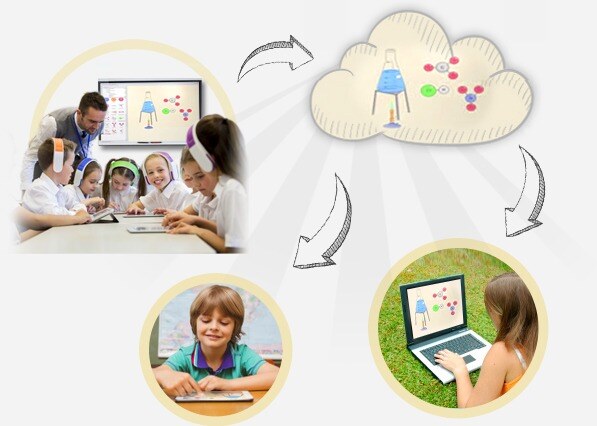
Poor handwriting, lighting and visibility or a lack of interest in improving artistic skills can all be overcome by integrating Information and Communication Technologies (ICT) in Education. Picture this, a group of students in a lab are taught a lesson in chemistry through the use of a software program. The experiments they conduct, then are recorded using their computers. They use MS Word or Excel to do their graph work and presentations. The students can also collect data using various plugins that are installed on the computer. This gives the students time to understand and explore the concepts efficiently and quickly.
An ICT classroom consists of three main aspects - Input, Output and External add ons. Inputs refer to the use of Visualisers like cameras, computers, tablets, student response systems and application software. Output sources consist of projectors, interactive whiteboards and large display monitors. Add ons would mainly be Digital Recorders, Digital Cameras, Switchers or any other external devices.
The reason why ICT is being integrated into classrooms is because it helps improve knowledge, comprehension, practical skills and presentation skills of the children. However, setting up the devices can be troublesome at first and the investment may seem too large. Teachers with a lack of experience in using modern technology may find it difficult to use ICT tools. These issues can be overcome by understanding that any money invested in this technology or in training teachers to learn to use the technology really cuts down on costs in the future. No textbooks are required to be bought every year and the one time investment in training staff really pays off in the long run by improving results in education. When teachers can interact with students and help them enjoy the lessons, it improves not only concentration but attendance as well.
ICT classrooms have proved that through the use of images, children can retain information for longer periods of time. Complex instructions can also be understood better.
Another major benefit of ICT integrated classrooms is that students with disabilities can be educated along with other children of their age. They will get the benefit of being present in a general classroom without being left behind in the curriculum as the lessons and instructions will be modified to their abilities and the teaching staff will be able to provide special support to these individuals.
With all of these benefits, it is quite clear that an ICT classroom is the best answer for the gaps in the current education system. Not only is this technology being adopted across many nations, but it is also being improved and updated as advancements in technology improve. Integrating such technology will enable the children of the future generations to stay up to date with the overload of data, modern inventions, general improvements in science and technology, while allowing them time to grasp the basics of difficult subjects like math and science with utmost confidence.

.png)