.png?width=1322&height=350&name=C3ITXperts-logo-R%20(1).png "C3ITXperts-logo-R (1)")


Updated August 17th 2026
What has changed in NDMC smart classes by 2026?
This article began with a 2019 plan to bring smart classes to NDMC and Navyug primary schools. By 2026, NDMC’s education work has grown beyond basic smartboards and projectors.
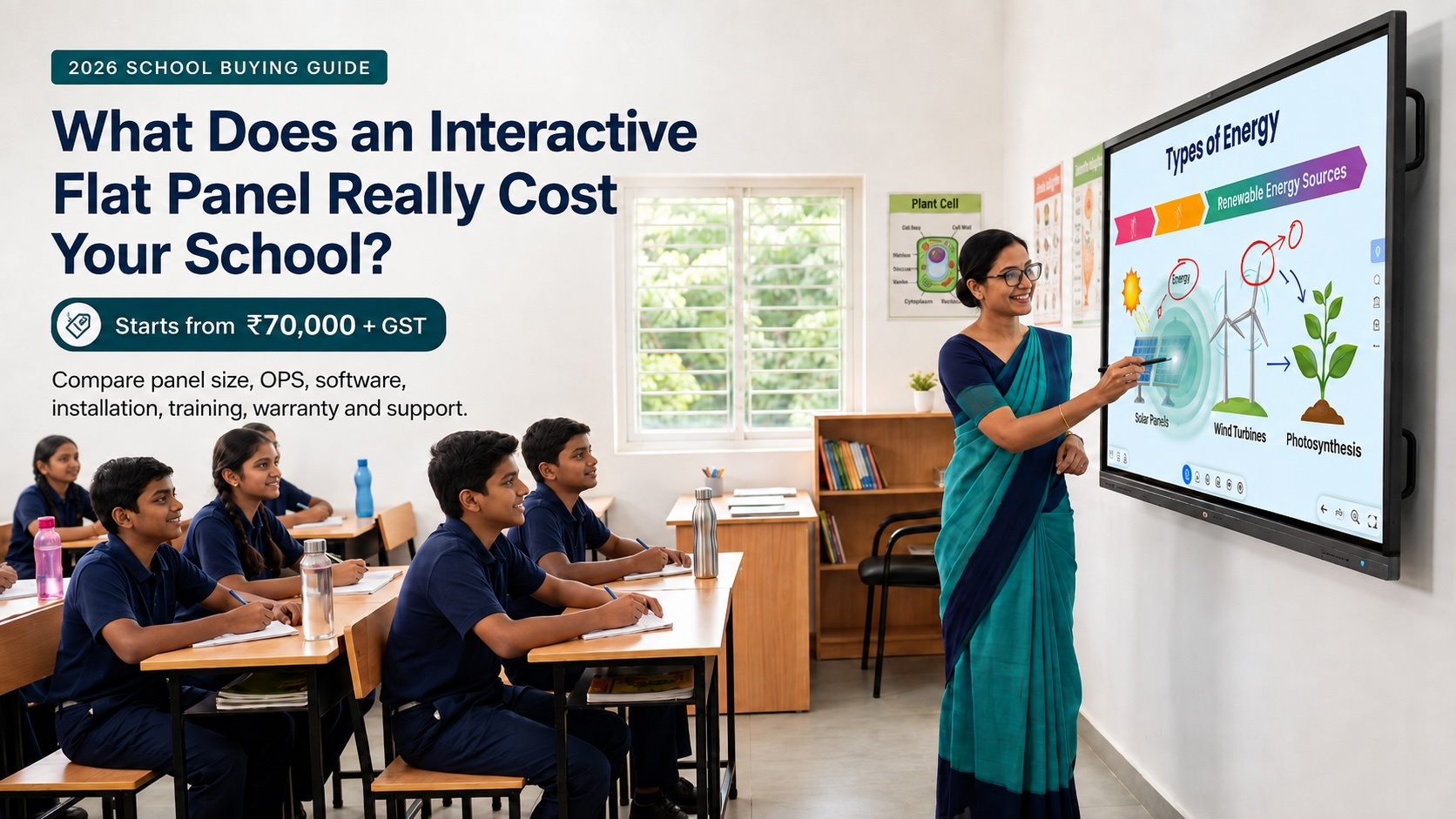
NDMC’s education page says its schools have 55-inch LED Smart TVs and portable LED projectors. A 2025 report also described a plan for 346 smart classrooms with Interactive Flat Panels, CCTV, and digital learning tools. Read the NDMC education information
In 2026, reports also described more support for basic reading and writing, AI, and smart classrooms. NDMC opened an AI, Augmented Reality, and Virtual Reality learning lab at Navyug School, Sarojini Nagar, for Classes VI to X. The lab was reported to have eight VR headsets and digital content for more than 70 school topics.
This shows how smart classrooms are changing. They are moving from simple screens to more interactive and hands-on learning.
The 2019 plan is still historical information. It does not prove that every school named in that plan has the same equipment today. Schools should confirm current details with NDMC before making buying or performance decisions.
The main lesson is simple. Technology works best when it is planned with the lesson, the teacher, the network, the content, student safety, and support in mind.
What was announced for primary schools in 2019?
The original report described an expansion of smart learning facilities in primary schools after smart classrooms had already been introduced in English and Hindi medium sections for Classes 6 to 12 across 30 NDMC and Navyug schools.
According to the report, the next phase aimed to introduce smart learning tools in 45 primary schools serving approximately 10,000 students.
The reported technology environment included:
- Multimedia equipment
- LED displays
- CCTV cameras
- Interactive smartboard screens
- Digital teaching resources
- Digital libraries
- Computers and scanners
- Barcode printers
- E-library software
- High-speed broadband connectivity
The report also described a plan to add 12 digital libraries, increasing the number of digital libraries to 25 during that fiscal year.
These details show that a smart classroom was understood as more than a screen mounted on a wall. It was a combination of classroom technology, digital resources, connectivity, administration, and teacher use.
That is an important lesson for schools planning technology investments today.
A display may be the most visible part of a project, but it is only one part of the complete learning system.
Why Primary Schools Need Interactive Learning
Primary students learn through observation, conversation, movement, repetition, and direct participation.
A well-designed interactive classroom can support these learning behaviors more effectively than a static presentation alone.
Visual learning becomes easier to understand
Young students often understand a concept faster when they can see it represented visually.
A teacher can use an interactive display to show:
- Pictures and labelled diagrams
- Animated explanations
- Maps and timelines
- Number lines and shapes
- Story sequences
- Science demonstrations
- Vocabulary cards
- Real-world examples
For example, instead of explaining the water cycle only through spoken words, a teacher can display a visual sequence and ask students to label evaporation, condensation, and rainfall.
Students can come to the screen, move labels, and explain the process in their own words.
The technology does not replace the teacher’s explanation. It gives the teacher more ways to explain the same idea.
Lessons become more participatory
A primary classroom is more engaging when students do something with the lesson.
They may:
- Draw a shape
- Sort objects into groups
- Match words and images
- Complete a sentence
- Identify a pattern
- Move a character through a story
- Solve a problem on the screen
- Explain an answer to classmates
Interactive activities help teachers see which students are following the lesson and which students need more support.
Different learning needs can be supported
Students do not all learn at the same pace or in the same way. Some respond strongly to visuals. Others need to hear an explanation, practice repeatedly, or interact directly with an example.
A classroom display can support multiple formats within one lesson:
- Visual explanation
- Audio and video
- Digital writing
- Student discussion
- Group interaction
- Individual practice
- Immediate feedback
The technology should not be used to make every lesson flashy. It should be used when a different representation makes the concept clearer or the task more accessible.
C3 iT Xperts’ interactive display solutions for schools are designed to support interactive lessons, multimedia content, collaboration, and real-time feedback.
Six Simple Lessons for Schools
The NDMC plan gives useful lessons to any school planning classroom technology.
1. Start with the learning goal, not the device
The first question should not be,
Which smartboard should we buy?
It should be,
What should improve in the classroom?
Possible goals include:
- Better participation from quiet students
- Clearer explanations of difficult topics
- More accessible multimedia resources
- Faster feedback during lessons
- Better collaboration between students
- Improved teacher access to digital content
- More consistent learning resources across sections
Once the goal is clear, the school can select the display, software, content, and support model that fit the need.
A school that buys a device before defining the classroom problem may end up with expensive equipment that teachers use only for presentations.
2. Primary classrooms need simple technology
Younger students benefit from interaction, but teachers need a system that is easy to operate.
A complicated interface can slow down a lesson.
Too many logins, applications, cables, and menus can create anxiety for teachers and distractions for students.
A primary-school smart classroom should make the common actions easy:
- Start a lesson
- Open a prepared resource
- Write or draw on the screen
- Play audio or video
- Save notes
- Invite a student to interact
- Return to the main lesson
The more often a tool is used, the more important simplicity becomes.
3. Digital libraries extend learning beyond one lesson
The digital-library element of the NDMC plan is especially important because it points to access and continuity.
A digital library can help students and teachers find:
- E-books
- Reference material
- Curriculum resources
- Images and videos
- Practice activities
- Research material
- Reading content
- Teacher-created resources
However, a digital library should not become a large folder of unused files. It needs organization, search, ownership, and regular review.
Schools should decide:
- Who selects resources?
- Who checks quality and age suitability?
- How are resources organized by grade and subject?
- How are teachers shown what is available?
- How are outdated resources removed?
- How can students access approved content safely?
The library becomes valuable when teachers can find the right resource at the right time.
4. Connectivity is part of the teaching system
The original plan included broadband connectivity. That is a reminder that classroom technology depends on the network behind it.
A smart display may work well in a product demonstration but fail in a classroom if the network is unreliable or the system has not been tested at scale.
Before a school expands smart classrooms, review:
- Wi-Fi coverage in every room
- Bandwidth during peak usage
- Network security
- Device access and authentication
- Content filtering
- Backup connectivity
- Support response when the network fails
Teachers also need an offline backup. No school should allow one temporary internet failure to cancel the learning objective of an entire period.
5. Technology projects need teacher support
Installing the equipment is not the same as creating adoption.
Teachers need practical support that connects the technology to the lessons they already teach.
A general demonstration may show what the panel can do, but it may not show a teacher how to use it during tomorrow’s mathematics, language, or environmental studies lesson.
Useful support includes:
- Short, subject-specific practice
- Model lessons
- Peer support between teachers
- Simple classroom routines
- Quick troubleshooting guides
- A clear support contact
- Follow-up classroom visits
- Recognition for practical improvement
Training should answer a simple question:
Can the teacher use this confidently in the next real lesson?
For more guidance, read 7 Daily Routines That Make Smart Classrooms Actually Work in Schools.
6. Measure classroom outcomes, not only installations
A school can install smartboards in every classroom and still fail to improve learning.
The better measures are connected to classroom behavior:
- How quickly does teaching begin?
- How often do students participate directly?
- Can teachers find their resources?
- Are digital notes saved and shared?
- How often does the technology interrupt a lesson?
- Do teachers feel confident using the system?
- Are students receiving a consistent learning experience across sections?
These measures help leadership understand whether the investment is working in practice.
How Smartboards Help Primary Students Learn
Make abstract ideas visible
Young students often struggle when a concept is invisible or difficult to imagine. Interactive content can make it visible through diagrams, models, animations, and demonstrations.
A teacher can zoom in, highlight a part, move an object, or compare two examples. Students can see the relationship between the explanation and the result.
Support storytelling and language learning
Stories can combine images, text, sound, and student interaction.
A teacher can display a sequence of pictures, ask students to predict what happens next, and invite them to arrange events in order.
For language learning, students can practice:
- Letter recognition
- Word matching
- Sentence construction
- Pronunciation support
- Reading comprehension
- Vocabulary review
Improve mathematics practice
Interactive screens can make mathematics more visual and collaborative. Students can work with shapes, number lines, patterns, measurements, and problem-solving steps.
The teacher can display multiple solution methods and ask students to explain how they are different.
Support science and environmental studies
Digital images, diagrams, simulations, and videos can help students examine topics that cannot be brought into the classroom easily.
A teacher can show the parts of a plant, the movement of planets, a habitat, a weather cycle, or a safety demonstration.
The lesson becomes a conversation supported by visual evidence.
Encourage group work
Instead of one student answering while everyone else watches, a teacher can divide the class into groups and ask each group to contribute an answer, image, label, or explanation.
The display becomes a shared space for comparing thinking.
Before a School Buys Smart-Classroom Technology
Classroom readiness
Review room size, viewing distance, lighting, seating, wall strength, electrical points, cable paths, and acoustics.
The best device in the wrong room will still create a poor experience.
Teacher workflow
Understand what teachers currently use, what devices they carry, where lesson resources are stored, and how they prepare for class.
The new system should simplify the workflow rather than add another disconnected tool.
Curriculum alignment
Choose content and applications that support the school’s curriculum, language needs, teaching methods, and assessment pattern.
A resource library is only useful when teachers can connect it to the lesson plan.
Data and student safety
Schools should define how student information, accounts, recordings, and digital work are stored and protected.
Public access to classroom devices should be controlled, and teachers should know how to manage student participation safely.
Support and ownership
Assign responsibility for configuration, troubleshooting, content organization, training, and review.
If nobody owns the system after installation, small issues become adoption problems.
C3 iT Xperts’ education solutions bring together classroom technology, IT infrastructure, digital learning, hybrid classrooms, and support planning.
A Simple 90-Day Plan
Days 1 to 30: Make the basics reliable
Start with three actions:
- Turn on the display and open the lesson resource.
- Use one simple interactive activity.
- Save or close the lesson correctly at the end.
Do not introduce every advanced feature immediately. Give teachers time to build confidence with the basic workflow.
Days 31 to 60: Build peer support
Pair teachers who are comfortable with the system with colleagues who need help.
Use short demonstrations inside real classrooms instead of long feature presentations.
Encourage teachers to share:
- One resource that saved time
- One activity that worked
- One problem that needs solving
Days 61 to 90: Review and improve
Look at teacher confidence, student participation, start-of-class delays, recurring technical issues, and resource usage.
Then introduce one additional capability that clearly supports the curriculum.
For a detailed implementation approach, read the 90-Day Smart Classroom Stabilization Plan.
How to Know the Investment Is Working
Money is only one part of the decision. Schools should also check whether teaching and learning are improving.
Track teacher adoption
Measure how many teachers use the system weekly, not only how many teachers attended training.
Track time saved
Observe how long it takes to begin a lesson, locate a resource, change activities, and save the work.
Track participation
Look for students explaining, solving, presenting, annotating, and responding.
Track technical reliability
Record repeated issues by room, device, network connection, and software. Repeated problems need system-level solutions.
Track support quality
Measure response time, issue resolution, teacher confidence after support, and recurring faults.
Track continuity
Check whether a substitute teacher or another teacher can enter the room and use the agreed workflow.
A smart classroom creates value when it becomes part of everyday teaching, not only when it looks impressive during a launch event.
What School Leaders Can Do Now
If your school is planning smart classrooms, do not start with a product list.
Start by talking to teachers.
Ask teachers what slows lessons down.
Ask academic leaders what students need to practice.
Ask the IT team whether the network can support the plan.
Ask the leadership team how adoption will be measured after installation.
Then choose technology that fits the answers.
Get a Second View before you approve a proposal
C3 iT Xperts can help schools review:
- Interactive displays
- OPS and teacher devices
- Classroom connectivity
- Audio and video
- Digital learning resources
- Teacher professional development
- Warranty and support
- Rollout and adoption plans
Book a Smart Classroom Consultation
Get the SMART Classroom Reset Guide
Use the guide to identify classroom friction, teacher-readiness gaps, support needs, and adoption priorities before buying more technology.
Download the SMART Classroom Reset Guide
Explore C3 classroom technology
See Classroom Tech solutions for interactive flat panels, smart boards, projectors, audio systems, software, and related education technology.
Frequently asked questions
What were the NDMC smart-classroom plans for primary schools?
The original 2019 report described plans to introduce smart learning tools in 45 NDMC and Navyug primary schools serving approximately 10,000 students. It also described multimedia equipment, interactive smartboard screens, digital libraries, computers, scanners, e-library software, and broadband connectivity.
Why are smart classes useful in primary schools?
Smart classes can make lessons more visual, interactive, and accessible. Students can respond to diagrams, stories, simulations, questions, and activities instead of only listening or copying from a board.
Do interactive smartboards replace teachers?
No. The teacher remains responsible for the explanation, activity, questions, feedback, and classroom relationships. An interactive display is a teaching tool that can give teachers more ways to represent and explore a concept.
What equipment is needed for a smart classroom?
The exact setup depends on the school. It may include an interactive display, teacher device or OPS, network connectivity, audio, software, digital content, classroom furniture, power, installation, training, and support.
How can schools avoid wasting money on smart-classroom technology?
Start with a readiness assessment and a clear learning goal. Test the proposed setup with real teachers and real lessons before scaling. Include training, support, content, infrastructure, and adoption in the budget rather than buying only the display.
Is a digital library enough to improve learning?
No. A digital library is valuable only when resources are organized, age-appropriate, easy to find, connected to the curriculum, and regularly used by teachers and students.
Can existing classrooms be upgraded without replacing everything?
Often, yes. A school can review its current displays, connectivity, teacher devices, software, classroom routines, and support process before deciding what needs replacement.
How long does smart-classroom adoption take?
Adoption develops over time. Teachers need practical training, repeated use, peer support, technical help, and leadership review.
A 30-day or 90-day adoption plan is more realistic than expecting permanent change after one demonstration.
About the Author

Manoj Sundaram
Founder @ C3 iT Xperts
I help K–12 leaders turn "dusty" classroom tech into a daily teaching habit. 18 years and 11,000 classrooms have taught me that the best tech is the tech that "disappears" into the teaching rhythm.
18+
Years Experience
11k+
Classrooms
50k+
Educators Impacted
.jpg)